
You Belong Because You Showed Up
I went to Russia for the game. I stayed for the tea.

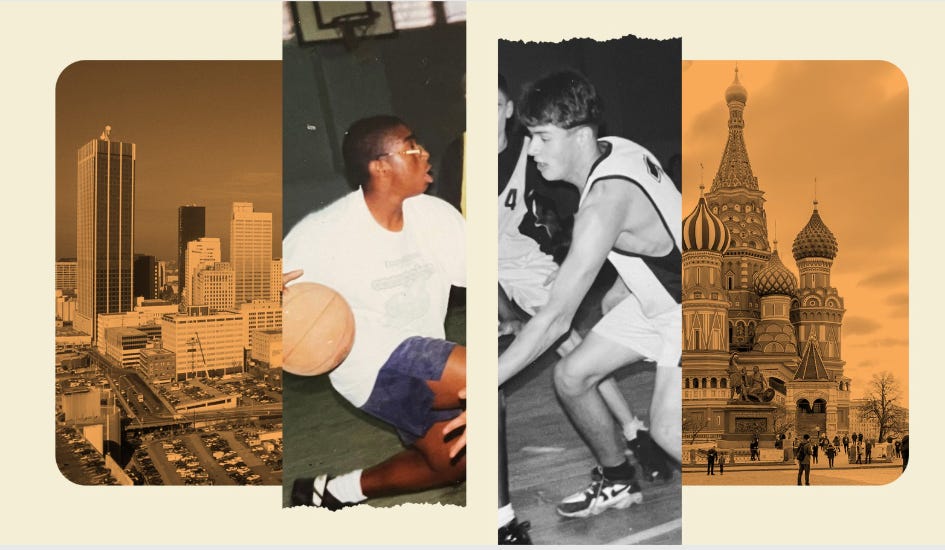
The door to the locker room burst open like a gag in a bad comedy, and suddenly the room was full of teenagers who were definitely not supposed to be there.
I was sixteen, somewhere in Russia, still drenched with sweat from the game, pulling a dry shirt over my head in a concrete changing room that smelled like every locker room on earth. On the other side of the door, the chanting we’d heard during pre-game warm-ups had curdled into something closer to the demands of a mob.
Then the door gave. Students poured in. Teachers tried to grab the backs of their collars and haul them out. The boys who made it through shouted out the names of their favorite rappers at me — the only Black kid on the basketball team. And therefore, by the math, the single most fascinating human being on the medical college campus that day.
The girls had something else entirely different in mind, and their teachers — to my lasting disappointment — were not having it. I’ve held a small grudge ever since. This moment left a handful of tenth-graders from Atlanta there half-dressed, laughing so hard we couldn’t breathe.
This trip to Russia was my first flight ever. The first time on a plane. EVER! A school mission trip stapled to a basketball tour. We dropped off medicine and clothes at the orphanages by day, and ran pick-and-rolls against the local high schools and colleges by night.
Nobody told me the gyms would be packed before our bus would even arrive. This was the one day of the school year when every student would show up. Nobody told me a number on the back of a jersey would become my passport.
But that’s what it was. Basketball dropped me into a gym on the other side of the planet, full of people who spoke mostly broken English, and for 40 minutes, none of our differences mattered, because everyone there spoke ball. I belong before I’d earned it. I belonged because I showed up to play.
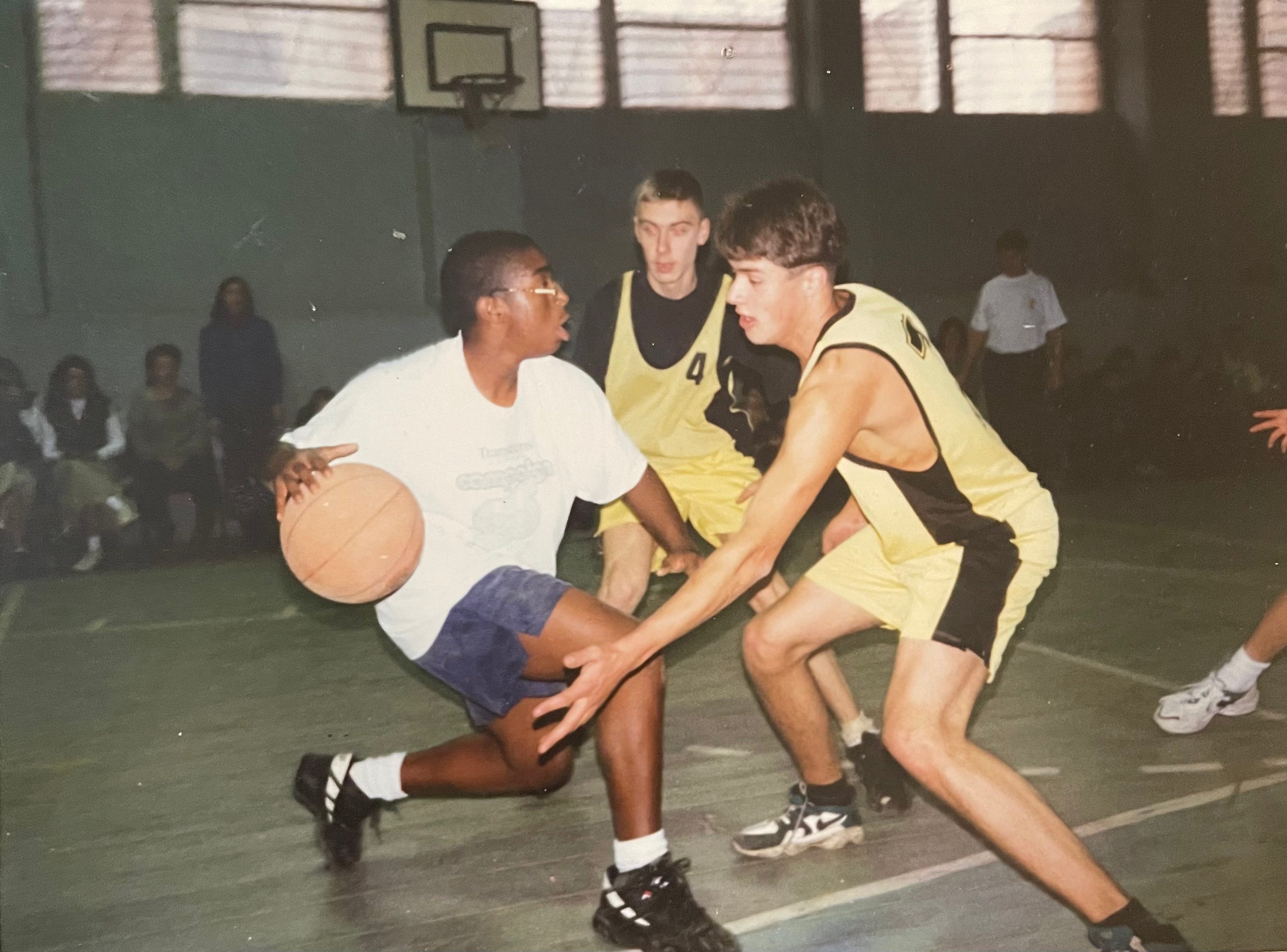
Finding a place in this world to belong has become a theme for my life. But I wouldn’t say I found it explicitly on the court. It was what came after that stuck.
When the locker room chaos died down, a smaller selected group of students would sit with us over tea. And not the sweet tea I’m accustomed to here in the South that comes over ice with enough sugar to stand a spoon up in. This was a proper tea. The strong stuff in real china cups, sugar cubes on the side, served with pryaniki — a soft glazed honey cookie also known as “Russian gingerbread.”
The students wanted to know what music American students listened to, what we did when there was nothing to do, and what we thought about Russian politics, a question that we were strongly encouraged by our chaperones to avoid. I gladly obliged.
One student, named Nadya, stayed rent-free in my head. Quiet, until she wasn’t, tucked her hair behind her ear as she slid a sketchbook across the table and showed me her drawings. A teenager in Russia decided that a stranger from the U.S. was safe enough to show her art.
This moment means something to me. We’ve been raised on what the media feeds us. Movies depict Cold War villains, grim men in fur hats, and whatever MTV was exporting that year. If you feed a kid nothing but the highlight reel, there’s a good chance he’ll mistake it for the whole film. But if you sit that kid at a table across from an actual person, and all of that falls apart because it turns out you both like the same music and neither of you can draw hands. Sixteen years old, with sugar cubes slowly dissolving in my cup of hot tea, I learned the thing that drives me today: the game may have brought you here, but the tea is the memories you keep.
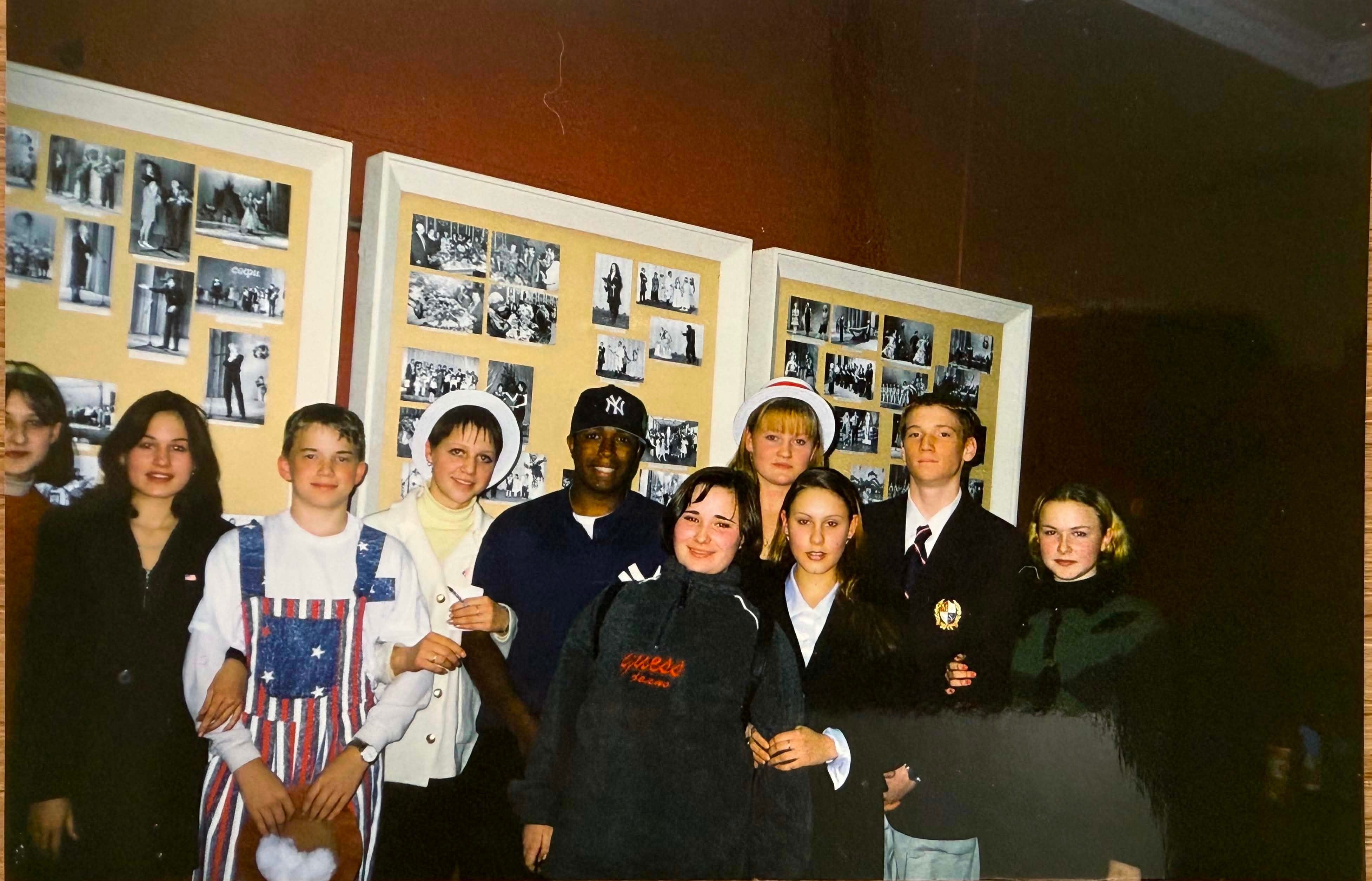
That’s what Off Course is. The tea, the quiet conversations, the sketchbook we may be too shy or embarrassed to share with anyone from our hometown.
It lives in the stuff that happens away from the courts, the stadium, past the resorts, a few blocks beyond wherever the cameras are pointed. The score fades by morning, but there is always more underneath the thing we paid to watch. There’s more to learn about who these people are, where they’re from, and why any of it matters to the ones actually living it.
It’s for whoever already suspects that. Who loves sports but couldn’t care less about the box score. Who travels — not for the content or the drinks by the pool — but for the person, has always quietly believed the best part of any trip is the part not on the itinerary.
So we start at the beginning. Russia was my origin story, and this note is a claim to the thing I’m building. And you get two for the price of one. I’ve got more stories from my multiple visits to Russia, like waking up to an intruder in my hotel room. The night I got lost in Romania. The summer in Istanbul that nearly talked me into never coming home.
I’ll tell you all of it, and I’ll go dig up more, and I’d love it if you came along on this journey when I do.
Oh, and what about Nadya? Thanks to the birth of the good parts of social media, she found me years later. A message out of nowhere, wishing me a happy birthday. Much older now, married, with a kid and a career she loved. Twenty years and a whole life later, she remembered. A connection that should have been fleeting, but wasn’t, because once upon a time, two kids sat down over tea and decided actually to listen.
That’s the whole idea. It took me a while to get there, but this is what I’ve been chasing ever since that locker room in Russia.
And I’d love to hear about the time something unexpected took you somewhere new.
Reply and tell me. I read everything. Some of your answers might become the next Off Course story.
Glad you’re here. Let’s get lost together.

Jonathan Giles - Founder, Off Course